

Compare
Texts and spreadsheets weren’t built for this
Stop piecing together supply requests, runs, and receipts across messages and lists. Bus Stash gives your team one system that actually works on the road.
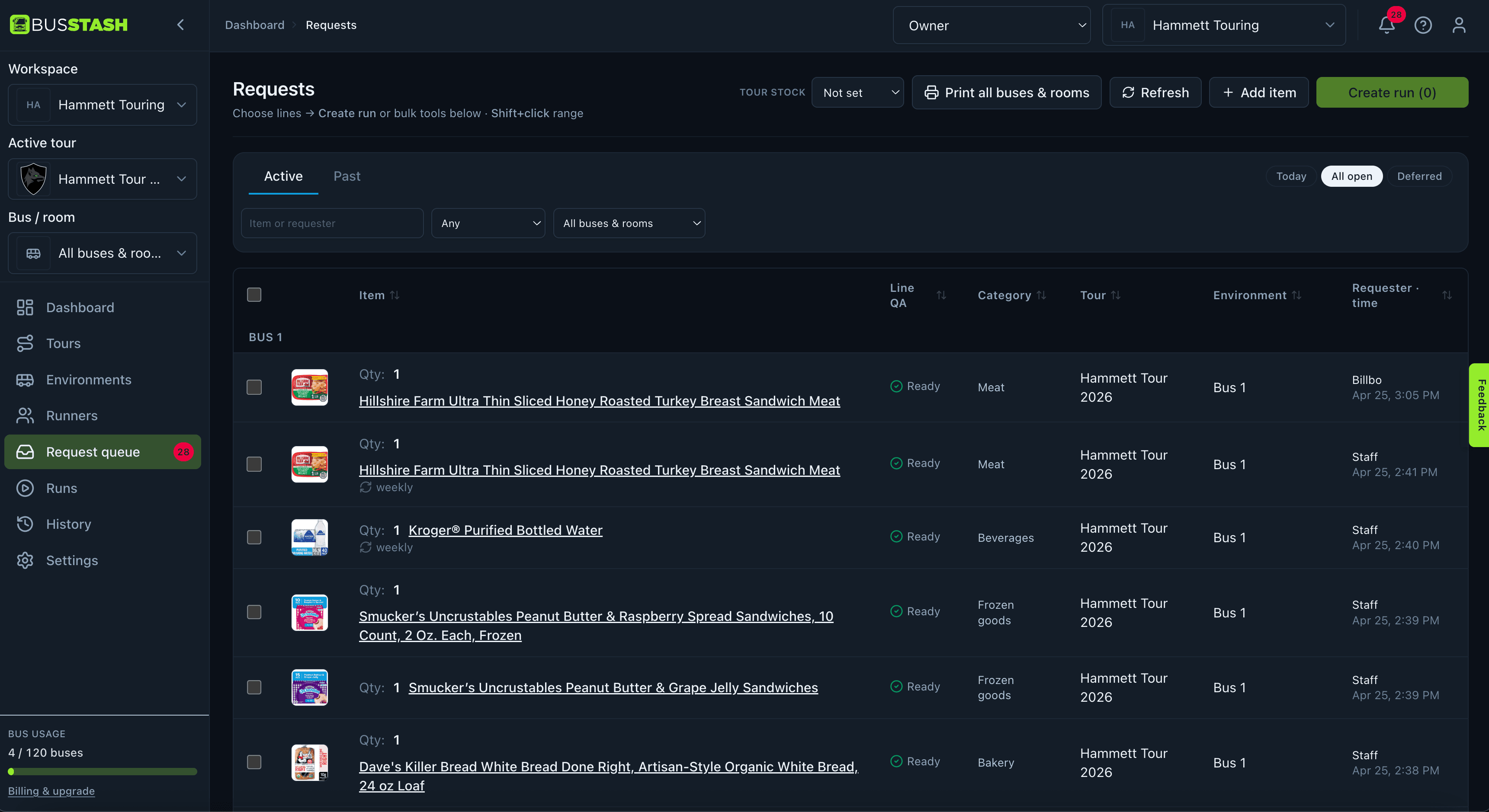
What most teams are doing now
Stock gets handled across whatever’s easiest in the moment.
A text here.
A note there.
A list someone started yesterday.
It works, until things move fast.
- Requests come in from everywhere
- Lists get outdated the second they’re made
- No one is fully sure what’s already handled
- Runs are built on the fly
- Receipts end up scattered, or missing
Familiar tools
Sheets and DMs are great, until the tour outruns your ability to patch them together.
It’s not the tools, it’s the lack of a system
Texts and spreadsheets aren’t designed for this kind of work.
They don’t connect requests to execution.
They don’t track what actually happened.
They don’t reflect how runs work in real life.
So everything turns into coordination.
Systems gap
The missing piece isn’t ‘more rows’, it’s wiring request → run → receipt as one object.
At a glance
Swipe between columns on your phone; desktop keeps both in view.
Bus Stash
- All requests in one place
- Runs organized and ready to execute
- Clear ownership and flow
- Nothing gets double-bought or missed
- Runs track what actually happens
- Receipts tied to the run
Texts + Spreadsheets
- Requests scattered across conversations
- Lists need constant updates
- No clear ownership
- Easy to miss or duplicate items
- No built-in way to track runs
- Receipts live somewhere else
Bus Stash
- All requests in one place
- Runs organized and ready to execute
- Clear ownership and flow
- Nothing gets double-bought or missed
- Runs track what actually happens
- Receipts tied to the run
This is where the shift happens
Structural deltas
Four shifts, each one removes a whole class of ‘somebody find that thread’ moments.
Four shifts
From messages → to structured requests
Everything comes in one way, tied to a bus or location
From lists → to runs
Work is grouped into real shopping runs, not random tasks
From guessing → to clarity
You can see what’s handled and what’s not
From scattered receipts → to proof
Everything stays attached to the work
They weren’t built for this
Wrong fight
Generic productivity apps optimize for individuals, tours optimize for handoffs across people and places.
No structure
They don’t understand buses, rooms, or locations
No execution layer
They stop at “write it down”, not “get it done”
No connection between steps
Requests, runs, and receipts all live in different places
No accountability
You can’t easily see what actually happened
Where things start to fall apart
- Multiple buses or locations
- Multiple people handling runs
- Fast-moving or changing schedules
- High volume of requests
- When finance needs receipts
Complexity spike
Single-bus, single-runner days hide the problem, multiplied buses and hands expose it fast.
What changes when you switch
- Work moves faster
- Less back-and-forth
- Fewer mistakes
- Clear ownership
- A system your whole team can follow
After the switch
You trade heroic coordination for a boring pipeline, and boring scales.
Stop stitching this together yourself
Run stock through a system built for how the work actually happens.