

From request to stocked, this is how it actually works
Bus Stash gives your team a fast way to collect supply needs, organize runs, and stock buses, rooms, and locations, without the chaos.
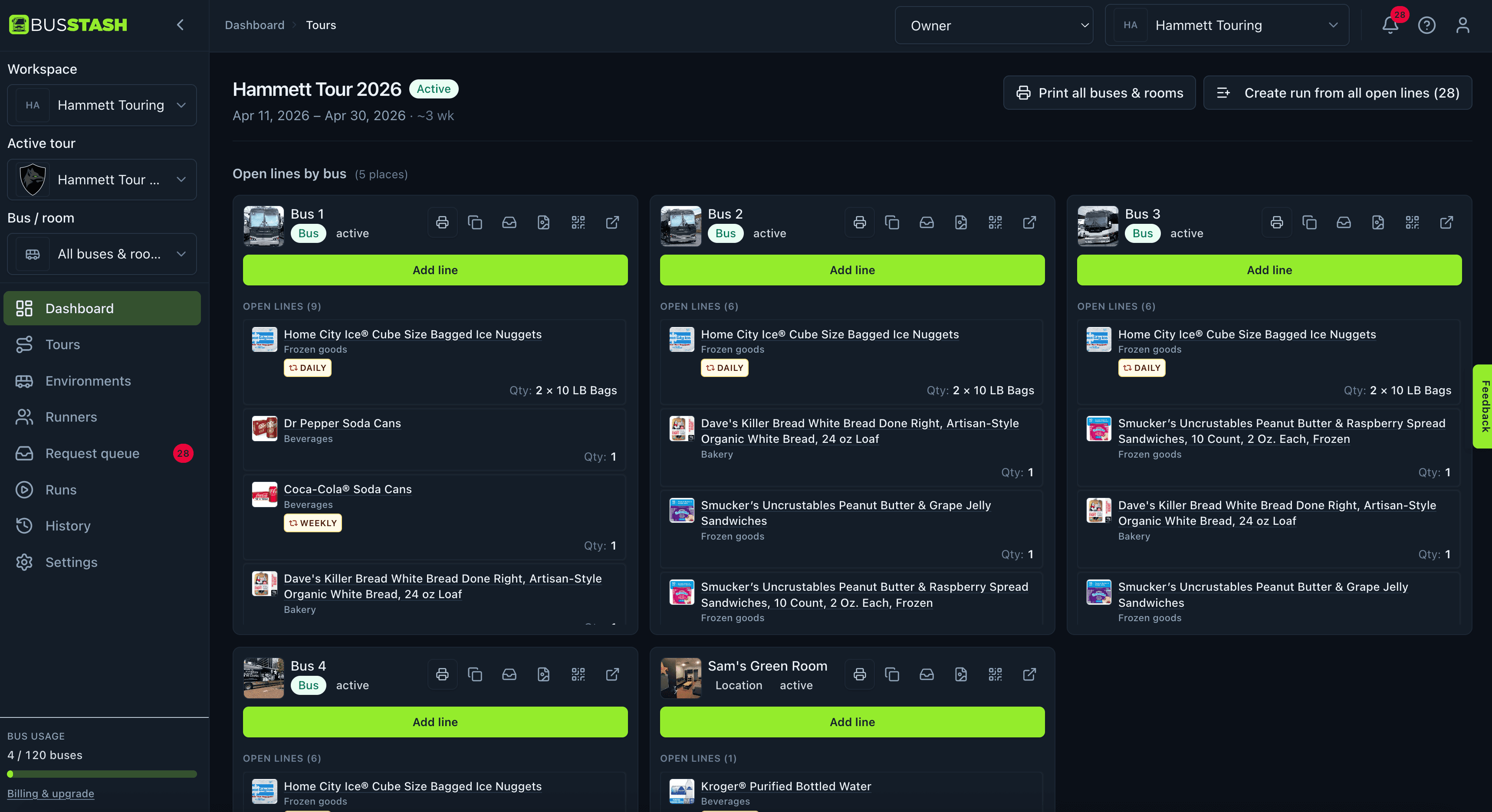
This is a system, not a list
On a tour, supplies don’t just “get managed.”
They get requested, picked up, and delivered, fast.
Bus Stash is built around that reality.
Instead of juggling texts, notes, and memory, everything moves through one flow, from request to run to stocked.
The spine
A fixed sequence you run every time, not a loose checklist. Same four steps, scaled to the tour.
Collect
QR or link requests
Organize
Triage into runs
Shop
Runner checklist
Proof
Receipts on the run
At a glance
Requests collected
Line items roll in from QR codes and links, no accounts, no friction.
The spine
A fixed sequence you run every time, not a loose checklist. Same four steps, scaled to the tour.
Collect
QR or link requests
Organize
Triage into runs
Shop
Runner checklist
Proof
Receipts on the run
At a glance
Requests collected
Line items roll in from QR codes and links, no accounts, no friction.
One simple flow your whole team can follow
Operating rhythm
Each step below is one lap: collect, commit, execute, prove, then repeat for the next run.
 1
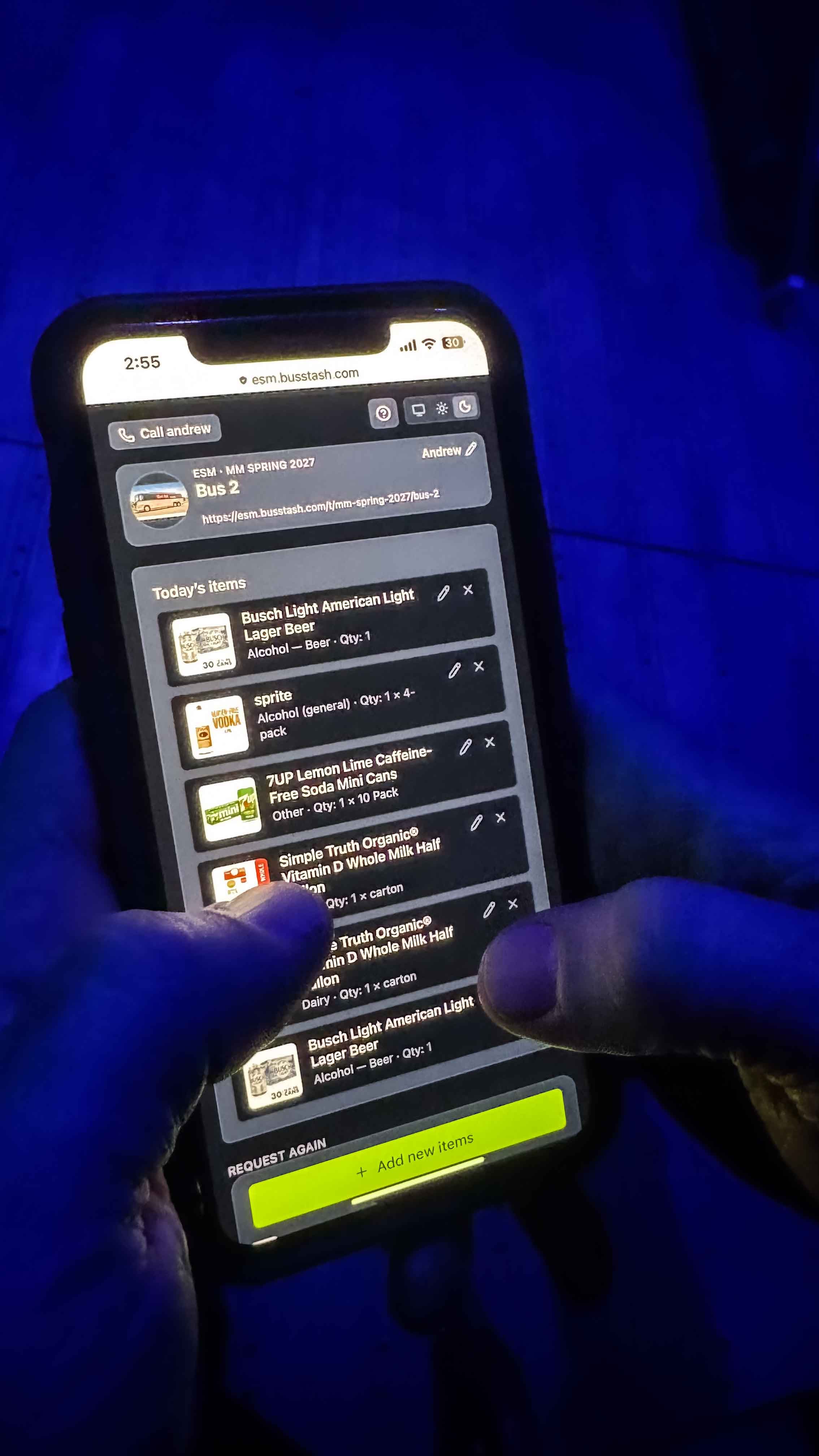
1Collect requests
Crew submits what they need by bus, room, or location.
They scan a QR code or open a link, no accounts, no friction.
Requests come in as clear line items with quantities, notes, and optional photos.
What this fixes
No more chasing messages or guessing what someone meant.
 2
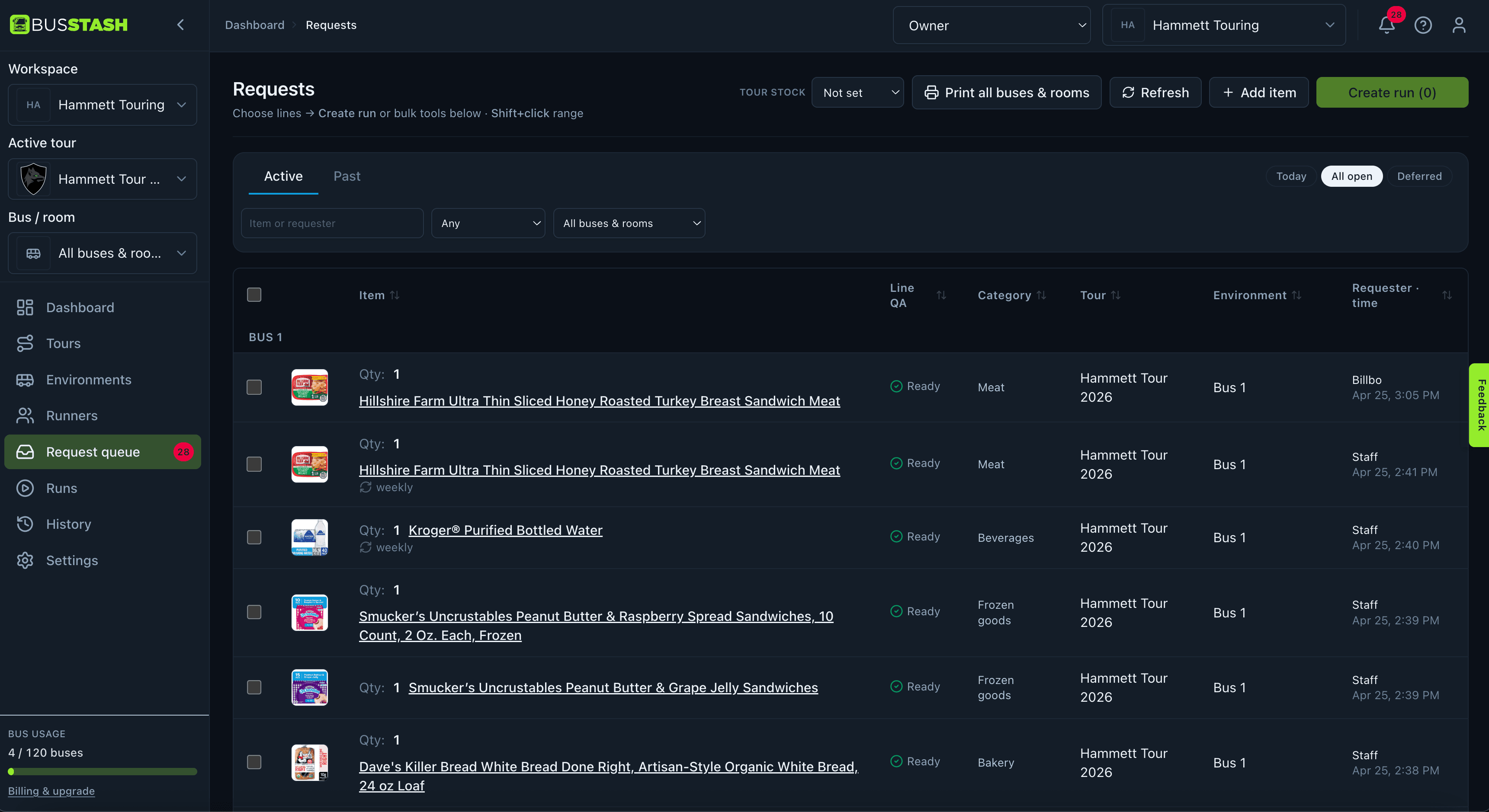
2Organize runs
Take incoming requests and group them into runs your team can actually execute.
You decide what gets handled now, what waits, and how it’s grouped.
What this fixes
Work stops being scattered and becomes actionable.
 3
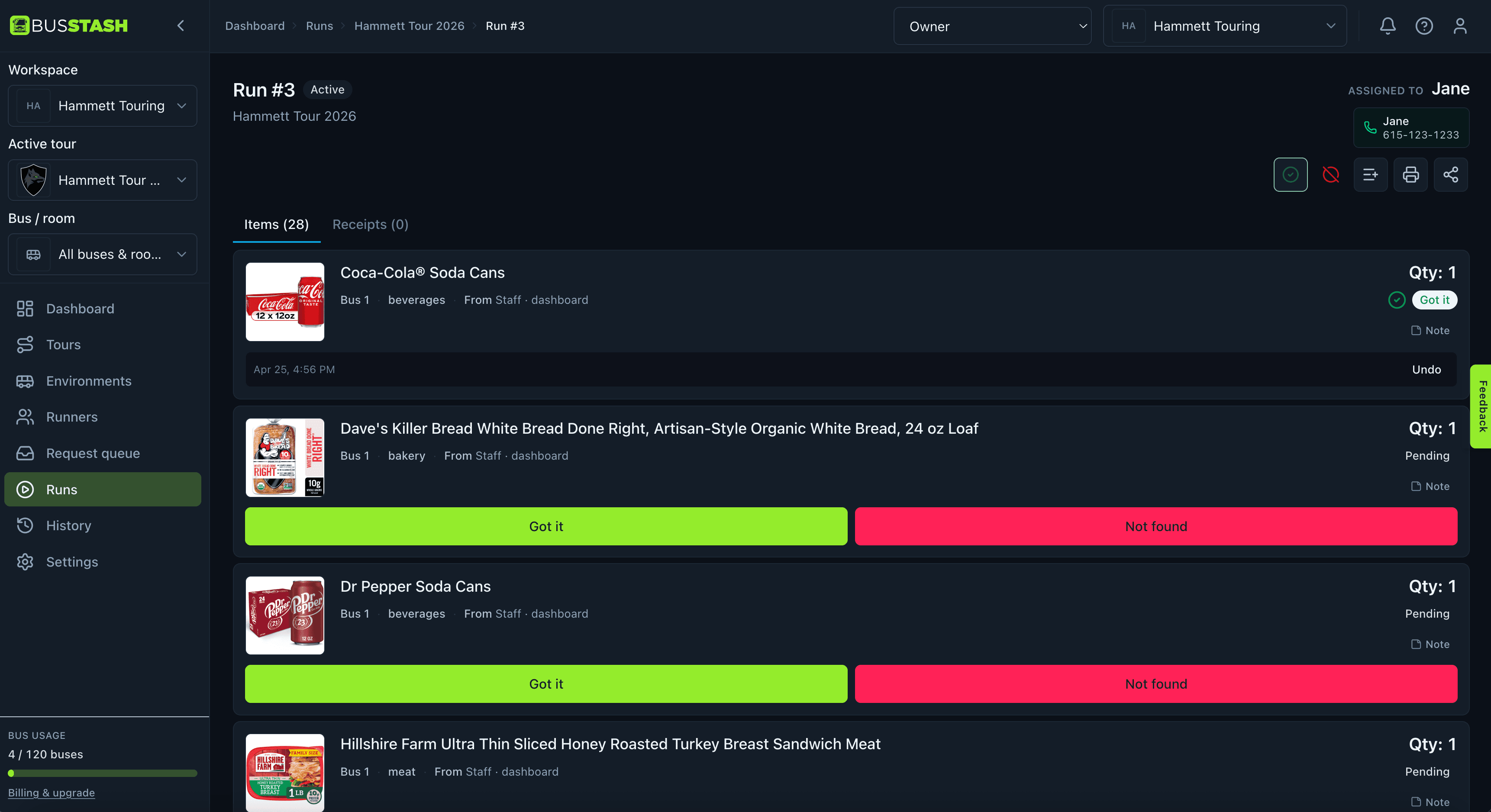
3Shop and deliver
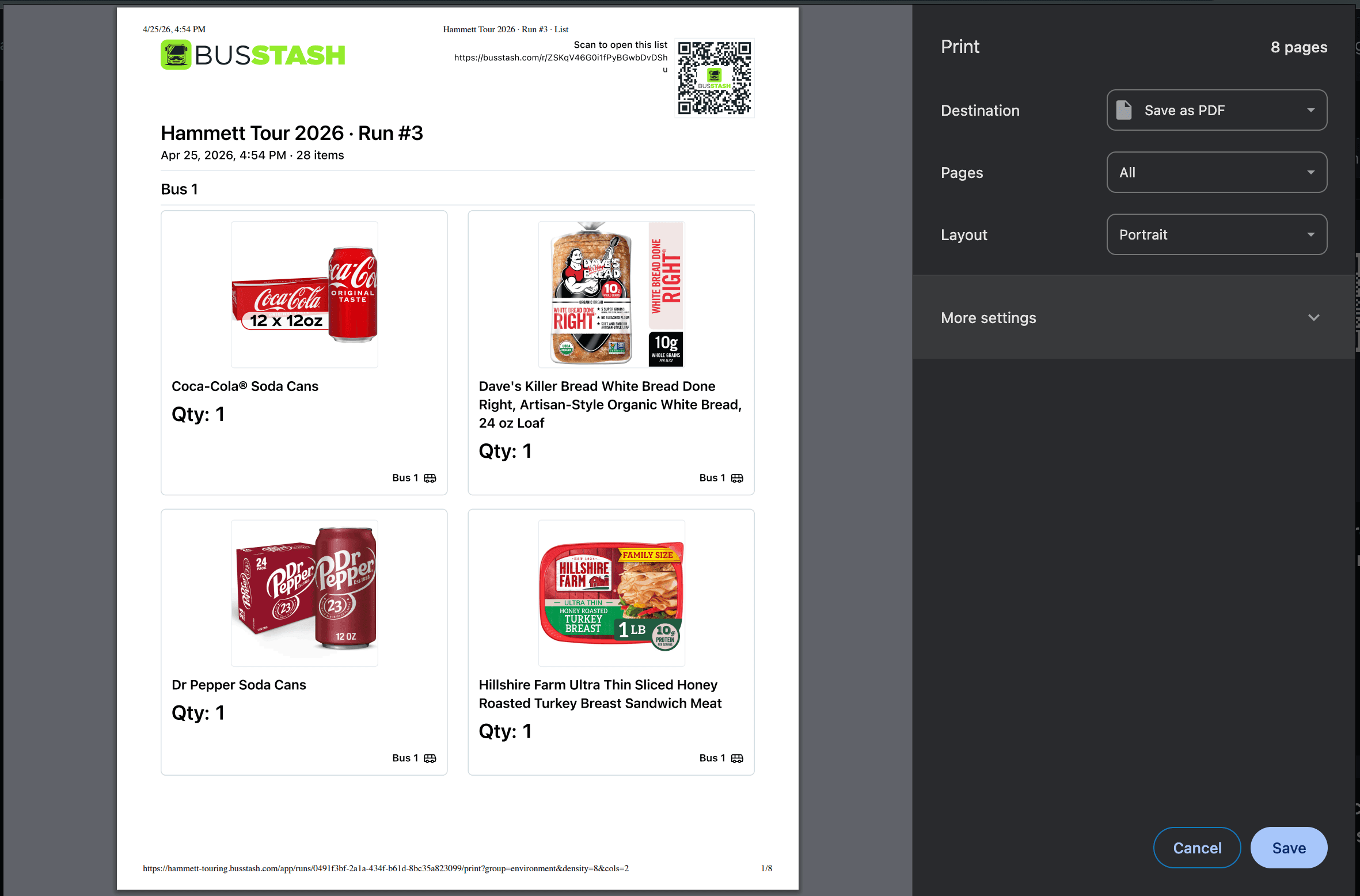
Runners use a clear checklist to handle the run, marking what’s found, what’s not, and adding notes if needed.
Items get delivered to the correct bus, room, or location.
What this fixes
No confusion on what to buy or where it goes.
 4
4Keep everything tied together
Receipts and outcomes stay attached to the run.
You can look back and see exactly what happened, without digging through texts or emails.
What this fixes
No lost receipts. No rebuilding history later.
Built around how the job actually happens
Field-shaped
Location-first requests and run-shaped work match how tours move, not how software templates think.
By bus and location
Every request is tied to a real place.
Nothing gets mixed across buses or rooms.
QR-based requests
Anyone can submit what they need instantly.
No logins. No friction. No bottlenecks.
Runs, not lists
Work is grouped into runs, the way it actually gets done.
Not a pile of disconnected tasks.
Receipts with the run
Proof stays attached to the work.
Not buried in chat. Not lost in someone’s camera roll.
What usually happens instead
- Requests scattered across texts and side conversations
- No clear view of what’s already handled
- Same items requested multiple times
- Runs get messy or delayed
- Receipts disappear when you actually need them
Cost of drift
When nobody can see the whole board, the team pays in duplicate buys, late drops, and mystery receipts.
Built for every role on the tour
Whole team
Same rails for the person triaging requests and the person in the checkout line, no parallel reality in DMs.
Managers / coordinators
See what’s needed, what’s handled, and what’s next, without chasing updates
Runners
Get a clear checklist for each run, no guessing what to buy
Crew
Quickly request what they need, without logging into anything
Finance / off-app teams
Get receipts and summaries without digging through messages
When everything runs through one system
- Work moves faster
- Less back-and-forth
- Fewer mistakes
- Clear accountability
- A record when you need it
When it clicks
You spend less time reconstructing what happened, and more time running the next move.
Start running stock like a system
Set up your first tour and see how quickly your team can move when everything is in one place.